One of the difficulties with parenting is not knowing all of the obstacles your child faces daily from their peers. Especially when it comes to teenagers. Unless your child is one who is vocal about everything that bothers them, which most teens are not, it becomes difficult to navigate their hurts and frustrations. That is why some parents reach out to their child’s teacher/s. This makes sense because teachers spend the bulk of the day with their students and often have great intel on them. Yet, even this exchange is not always reliable, because it is difficult to keep track of the behaviors of all of your students. And some teachers don’t know how to identify certain nuanced behavior because they have either no experience or understanding of the behavior.
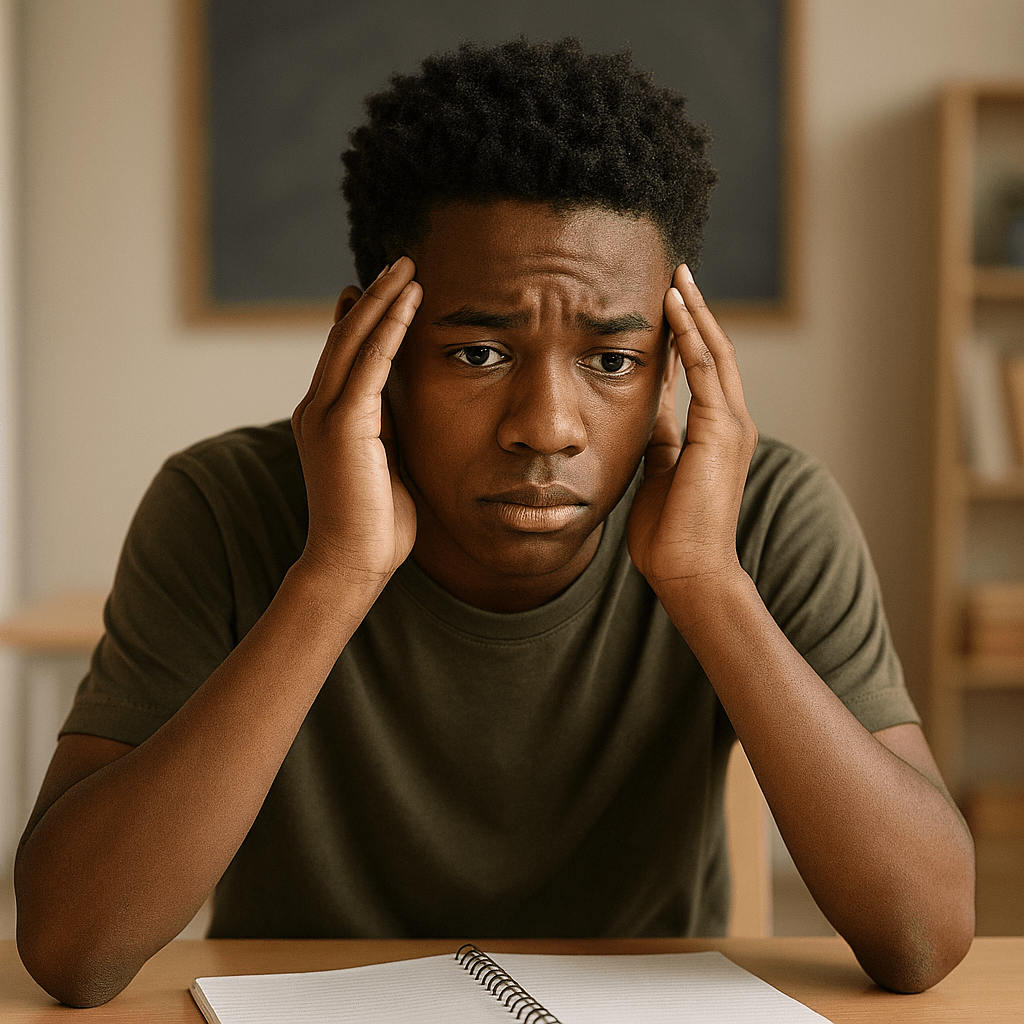
I had a male high school student, who I will call Rashawn Jones, in one of my social studies classes. He was very bright and outgoing with his friends except when they and other students teased him about the color of his skin. Colorism, a word coined by author extraordinaire Alice Walker, is defined by Merriam Webster’s dictionary as prejudice or discrimination against individuals with a dark skin tone typically among people of the same ethnic or racial group. This definition thoroughly describes Rashawn’s situation. Oddly enough, the teasing came from not only students who were lighter skinned, but from those who were either Rashawn’s shade or only a shade lighter than him. The darker ones jumped on the bandwagon so that the attention would only fall on Rashawn and rescue them from being denigrated. Despite Rashawn’s playful nature on everything else, his insecurities did not allow him to exchange insults when it came to this topic.
As a dark skinned teacher, I immediately recognized the trauma Rashawn faced as he shrunk his six foot frame into his combined chair-desk during these one sided colorism tirades. Annoyed, I would defend him by reminding the students that their insults were nothing more than a reflection of what other lighter ethnicities saw in them. And, that their behavior was a form of self-hatred imposed upon all people of darker skin tones across the globe. To my chagrin, the students would further respond with self-righteous indignation that, “I’m not as black as him.” As if to say only his coloring and darker is deemed repugnant to the majority of non-melonated society. Unable to give a history lesson on colorism at that moment, I merely used my authority and ordered them to stop. My edict only had immediate and temporary impact. I knew that the refrain, “You so black,” would replay continuously in Rashawn’s head throughout the period and possibly the rest of the day. Additionally, he would fall into a self-imposed silence to which he would not respond to questions that I knew he had answers. While these incidents were not frequent, they would happen repeatedly throughout the year.
Towards the end of the school term, Rashawn’s mother, Ms. Jones, scheduled a meeting to speak with his teachers. I was last in line to be relieved so that I could speak with her. I managed to hear the conversations of two other teachers prior to mine. They both spoke exclusively about Rashawn’s declining work habits, which was the main reason why Ms. Jones made the appointment. She wanted to know what if anything he could do to bring up his grades and how she could help. All the teachers before me provided the necessary information, which was helpful in the technical sense. They stuck to the script.
When I greeted Ms. Jones, her big smiling eyes spoke immediate recognition. She was one of a few parents who volunteered to chaperone our class trip to the Schomburg Center for Research in Black Culture.” We exchanged greetings of familiarity then got down to her purpose for calling the meeting. Like my colleagues, I too shared what I knew about Rashawn’s academics in my class and that I was disappointed in his grade slippage. I guess because of our positive rapport, she began to open up about something else going on with Rashawn. She said that he had become somewhat sullen and closed off. A light bulb went off in me and I shared how some of the boys occasionally teased him because of his skin color. That’s when the tears began to flow down her ebony cheeks.
My revelation obviously struck home in more ways than one. Ms. Jones informed me that she was unaware that this behavior was taking place again. What she meant by “again,” is that it was one of the reasons why they left their homeland in the Caribbean. Somehow, she mistakenly thought that things would be better in the United States. She proceeded to tell me that when he was much younger children would tease him badly to the point of tears. There were times when he just laid his head in her lap and cried himself to sleep. I felt her pain and shared some of my personal experiences of colorism to paint how the picture here in the United States is no different than the rest of the world. When she understood better, I changed the subject to how she could possibly help change things for her son.
My first suggestion was to show her son how handsome he is and that his skin is beautiful and resilient. Then she needed to make him aware of some prominent dark skinned entertainers and athletes who are deemed global heart throbs. She began to perk up after being reminded of this. Since Rashawn’s father was not a prominent figure in his life, I then suggested that she find him a male mentor who preferably is dark skinned. This would provide a role model and a confidant to guide him through his teen struggles. Finally, since Rashawn was tall with a wiry frame, I suggested that maybe he get involved in team sports and lift weights to bulk up some. This would help to boost his self-esteem.
Ms. Jones must have taken my advice because Rashawn came back to my class the following week and began asserting himself intellectually. His friends couldn’t keep up with him and when groups were assigned or we played intellectual games, they all wanted to be on his team. This continued to the end of the year. The following school term, Rashawn came back with a whole new attitude. Not only was he academically inclined but, he ended up attracting one of the sweetest young ladies in the school to become his girlfriend. She just so happened to be light skinned and what is considered socially attractive. I witnessed his friends’ reaction one day as he and his girlfriend were talking in the hall. I overheard, “How did he snag her,” his friends questioned as they looked on with envy upon their faces. Rashawn ignored their foolishness and relished their jealousy. He finally figured out that it wasn’t how his peers measured his attractiveness, but what he thought of himself. He remained a kind and gentle spirit who now had the confidence to attract the same qualities as a mate.